




This book won't make any sense to a non-meditator but I'm giving it five stars for the intended audience.
A lot of questions I've had are clarified here. Why certain rules are applied, how is the organization structured, and how will it adapt and grow now that S.N. Goenka is dead. I was pleasantly surprised with Goenka's answers to questions regarding the inevitable collapse of the Academy into a cult (or perhaps multiple cults/sects). His analysis and planning around the structure of the centres, the global organization, and the individual meditators/volunteers is staggeringly lucid.
If you have ever wondered who is appointed a vipassana teacher, how land is chosen for a centre, and how the Academy avoids being bought out by religions, corporations, and governments (which all have far more money), this is a really informative read.
User Profile

I struggle to read fiction.
This link opens in a pop-up window
Steven Deobald's books
To Read (View all 291)


Currently Reading


User Activity
RSS feed Back
Steven Deobald rated The Timeless Way of Building: 5 stars

The Timeless Way of Building by Christopher Alexander
The Timeless Way of Building is a 1979 book by Christopher Alexander that proposes a new theory of architecture (and …
Steven Deobald rated The tunnel: 4 stars

The tunnel by Russell Edson (Field poetry series)
Steven Deobald rated Homo Deus - A Brief History of Tomorrow: 5 stars

Homo Deus - A Brief History of Tomorrow by Yuval Noah Harari
"Over the past century humankind has managed to do the impossible and rein in famine, plague, and war. This may …
Steven Deobald rated Tao te ching: 5 stars
Steven Deobald rated Letters from a Stoic: 5 stars
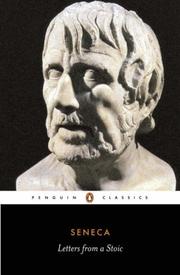
Letters from a Stoic by Lucio Anneo Seneca (The Penguin classics L210)
This selection of Seneca's letters shows him upholding the ethical ideals of Stoicism—the wisdom of the self-possessed person immune to …
Steven Deobald reviewed For the Benefit of Many by S. N. Goenka

Review of 'For the Benefit of Many' on 'Goodreads'
5 stars

Mindfulness in Plain English was first published in 1994, is one of the bestselling — …
Review of 'Mindfulness in Plain English' on 'Goodreads'
2 stars
Not a book I'd recommend to anyone looking to start a meditation practice but certainly useful background material.
Steven Deobald rated The Way to Ultimate Calm: 4 stars

The Way to Ultimate Calm by Webu Sayadaw
Exclusive North American distributor: www.pariyatti.org
Steven Deobald reviewed Not Always So by Shunryu Suzuki

Not Always So is based on Shunryu Suzuki's lectures and is framed in his own …
Review of 'Not Always So' on 'Goodreads'
5 stars
Adorable and often confusing lectures by Suzuki. A worthwhile read whether you meditate or not.
Steven Deobald rated The Buried Giant: 3 stars

The Buried Giant by Kazuo Ishiguro
The Buried Giant is a fantasy novel by the Nobel Prize-winning British writer Kazuo Ishiguro, published in March 2015.The novel …

Review of "Zen Mind, Beginner's Mind: Informal Talks on Zen Meditation and Practice" on 'Goodreads'
4 stars
Beyond the title essay/lecture, I find "Zen Mind" less meaningful than Suzuki's other work. Still good for meditators and non-meditators alike.

Review of "Slaughterhouse-five ; The sirens of Titan ; Player-piano ; cat's cradle ; Breakfast of champions ; Mother night" on 'Goodreads'
2 stars
I don't mind that Vonnegut soaks everything in allegory and this book is saturated. But I usually find his writing, unto itself, to be almost staggeringly beautiful. The language in "Sirens of Titan" was not.
Steven Deobald reviewed Homo Deus by Yuval Noah Harari
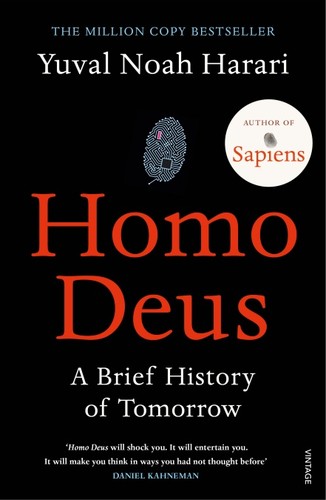
Tras el éxito de Sapiens, Yuval Noah Harari vuelve su mirada al futuro para ver …
Review of 'Homo Deus' on 'Goodreads'
The book starts out strong and also finishes beautifully. But Harari seems to get distracted around the halfway point and meanders back into humanity's history. He does so to justify his construction of ideas which cross-cut culture, religion, politics, and industry ...but at a length that I felt was unnecessary.
I would caution readers to remember Harari's own introduction to the material by the time he comes to what sound like conclusions, toward the end. He's only mapping potential branches. He's not making any bold predictions — the tips of some of the branches are even mutually exclusive. However, he's done a brilliant job of surveying the landscape of the future of humanity with respect to the dissolution of nations and the evolution of the species through biotech and new forms of intelligence.