




I really wish I could give this book five stars. It deserves to be read and I wish with all my heart that it might become more popular than it ever will be. It contains a lot of information you already know, scientifically and intuitively, packaged in the insight of a thoughtful and extremely curious forester. The book takes some time to build up steam but actually enjoys a real crescendo that The Hidden Life of Trees did not.
Both books were translated from the original German and it's possible the fault in the storytelling arc is not Wohlleben's. However, it's a jarring shift from one chapter to the next that makes his books such a challenge — a challenge I imagine exists in all translations. Each chapter stands on its own quite beautifully and each one tends to have a cohesive internal arc where the segues lack. This complaint …
User Profile

I struggle to read fiction.
This link opens in a pop-up window
Steven Deobald's books
To Read (View all 291)


Currently Reading


User Activity
RSS feed Back
Steven Deobald rated Buddha, Vol. 5: Deer Park (Buddha, #5): 2 stars
Steven Deobald rated Buddha, Vol. 7: Prince Ajatasattu: 2 stars
Steven Deobald rated Buddha, Vol. 4: The Forest of Uruvela (Buddha, #4): 2 stars
Steven Deobald rated Buddha, Vol. 3: Devadatta (Buddha, #3): 2 stars

Review of 'The Inner Life of Animals: Love, Grief, and Compassion―Surprising Observations of a Hidden World' on 'Goodreads'
4 stars
I really wish I could give this book five stars. It deserves to be read and I wish with all my heart that it might become more popular than it ever will be. It contains a lot of information you already know, scientifically and intuitively, packaged in the insight of a thoughtful and extremely curious forester. The book takes some time to build up steam but actually enjoys a real crescendo that The Hidden Life of Trees did not.
Both books were translated from the original German and it's possible the fault in the storytelling arc is not Wohlleben's. However, it's a jarring shift from one chapter to the next that makes his books such a challenge — a challenge I imagine exists in all translations. Each chapter stands on its own quite beautifully and each one tends to have a cohesive internal arc where the segues lack. This complaint stands alone since the books are otherwise a delight to read and my biggest fear is the stunted macro-scale writing will dissuade many readers from finishing his extremely important books.
This book is extremely important because it forces you to stand in front of a contemporary compilation of all knowledge we have on animal behaviour, ours included, and ask yourself some tough questions about the recursive nature of your own behaviour, as one animal of many, with respect to the rest of the animal kingdom. Armed with the theses of his previous book, Wohlleben then asks you to examine all DNA-carrying entities on the planet with your biology and ontology hats on. Pop science favourites like slime molds and tardigrades make an appearance but for the most part he favours the backyard and the farmyard over the laboratory. Most of the animals he writes about so eloquently are animals you have met. The questions he poses are often implicit and rarely those you'd expect from such a nature-lover. He doesn't demand that you stop eating honey or eggs (in fact, he clearly eats both) and the words "vegetarian" and "vegan" don't make a single appearance in the entire book. He clearly wants you to think about those options but he never once suggests specific actions he would recommend you take — he seems much happier to present the facts and let the reader wrestle with it herself.
Don't let this scare you away with the idea that this book is somehow a backhanded treatise on food ethics. It isn't. This book is equal parts biology and language, conjuring up questions like "what defines animal intelligence?" and "what, exactly, is courage?"
What makes Wohlleben's books so beautiful is that his perspective is almost inhumanly massive. He has little difficulty drifting between debating his momentary role in a bird fight outside his window and the millennia required for genetic evolution or old growth forests. Contrary to what one might expect, he loves cities and foretells a future where "our" cityscapes become colourful and explosive territories of animal safety and biodiversity. His interests lie not in convincing us of some specific thesis but of opening up our minds to a world of possibilities we normally only consider on rare occasions of deep contemplation or prolonged exposure to untouched nature.
I recommend reading this book in short bursts. Go through it a chapter or two at a time. They are short and easy reads, each filled with wonder and beautiful anecdotes. Every chapter will also give you something to ponder that night in your sleep and the next morning over breakfast. If you get tired of his writing style, please come back to it later. I assure you it's absolutely worth it.
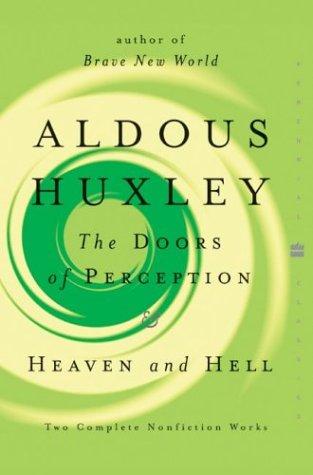
The Doors of Perception is an autobiographical book written by Aldous Huxley. Published in 1954, …
Review of 'The Doors of Perception & Heaven and Hell' on 'Goodreads'
4 stars
There is a lot I wish wasn't in Doors of Perception (largely, Huxley's experiments with psychedelics bring little of value to the book) but I do feel that it's essential reading for people today staring down the barrel of legal marijuana and a burgeoning interest in meditation. What is it about a sober life that makes us so bored? What is it that forces us to smash our senses apart on a regular basis? Huxley does a brilliant job of answering these questions and providing some insight into where we might find real answers outside the pub.
Steven Deobald rated Discourses on Satipatthana Sutta: 5 stars
Steven Deobald rated Finite and Infinite Games: 4 stars

Finite and Infinite Games by James P. Carse
Finite and Infinite Games is a book by religious scholar James P. Carse.
Steven Deobald reviewed The Alchemist by Paulo Coelho

The Alchemist (Portuguese: O Alquimista) is a novel by Brazilian author Paulo Coelho which was …
Review of 'The Alchemist' on 'Goodreads'
2 stars
I enjoyed The Alchemist. It's cute.
However, I must admit it felt the entire way through like reading the masterpiece of a highly competent 10-year-old. "The boy did this, then the boy did this, then the boy felt like this...." It's not a book I would recommend to anyone; being beaten over the head with allegory after allegory and pseudo-spirituality isn't my idea of time well spent.
Contributed articles presented at the Seminar on Vedanā and Sampajañña, held in 1990 at Dhamma …
Review of 'The importance of Vedanā and Sampajañña' on 'Goodreads'
4 stars
Structured as a collection of papers, essays, and articles, this book is a bit difficult to review as a "book." It's very thoughtfully put together and examines the material in question (sampajanna) from a number of angles. Like most technical Theravada literature, the contents will really only make sense to someone who has practiced the specific techniques referenced in the book. At a minimum, one 8-Day Satipatthana Sutta course, in the Goenka/U Ba Khin tradition, will be required for the reader to get much value out of the read. Given this prerequisite, however, this is a very worthwhile read for all serious Vipassana meditators.
If someone is interested in the contents but unsure if it yet applies to their practice, reading any one essay at random will give you a flavour for the rest of the book. It is highly repetitive — intended more for the purposes of inspiration than …
Structured as a collection of papers, essays, and articles, this book is a bit difficult to review as a "book." It's very thoughtfully put together and examines the material in question (sampajanna) from a number of angles. Like most technical Theravada literature, the contents will really only make sense to someone who has practiced the specific techniques referenced in the book. At a minimum, one 8-Day Satipatthana Sutta course, in the Goenka/U Ba Khin tradition, will be required for the reader to get much value out of the read. Given this prerequisite, however, this is a very worthwhile read for all serious Vipassana meditators.
If someone is interested in the contents but unsure if it yet applies to their practice, reading any one essay at random will give you a flavour for the rest of the book. It is highly repetitive — intended more for the purposes of inspiration than intellectual stimulation.
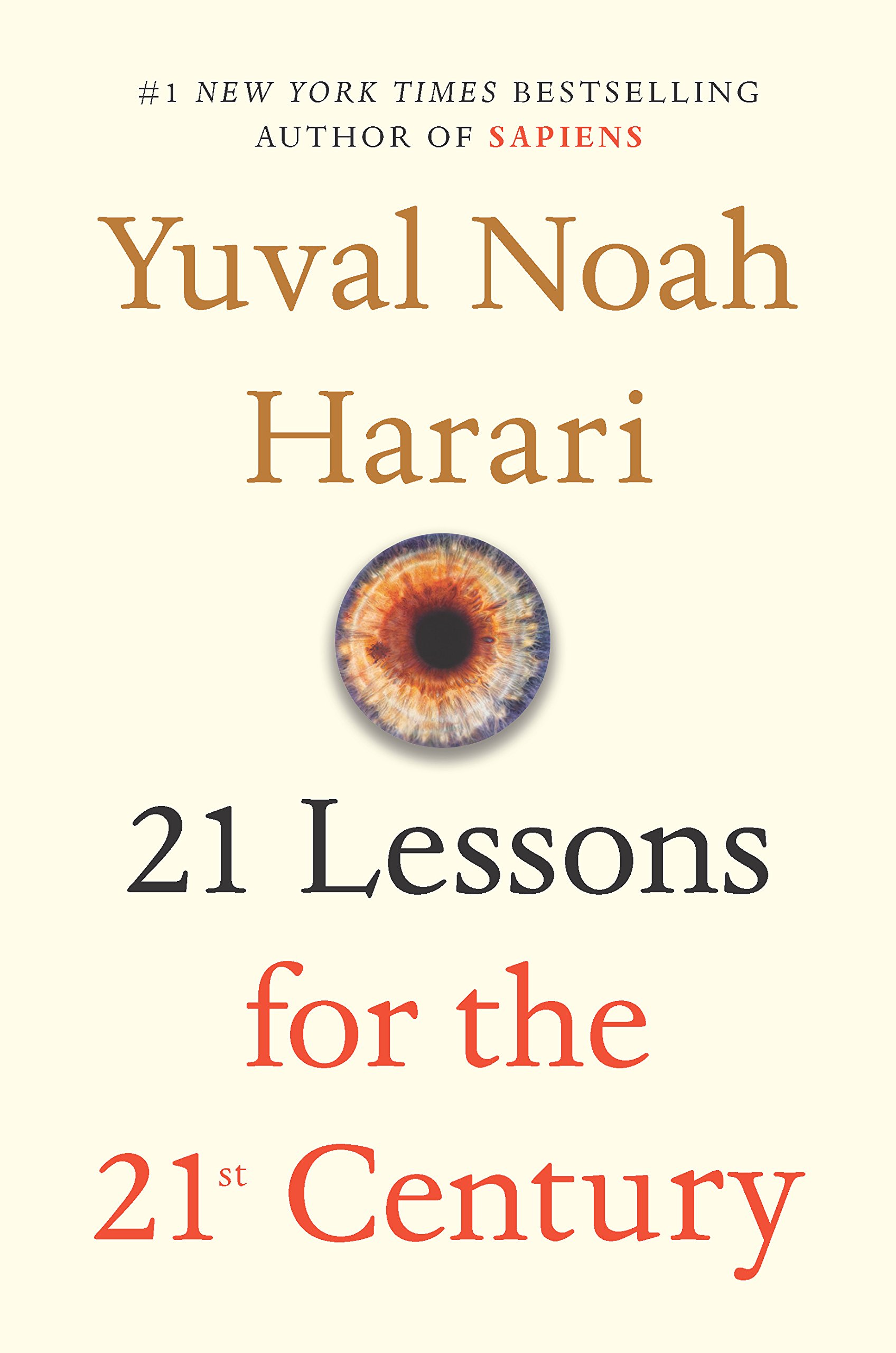
In Sapiens, he explored our past. In Homo Deus, he looked to our future. Now, …
Review of '21 Lessons for the 21st Century' on 'Goodreads'
5 stars
This book left me wide-eyed and exclaiming silently in my own head "Yes, exactly!" as often as "Sapiens" did before it. Where "Homo Deus" felt like a (mild) disappointment compared to Harari's original work, "21 Lessons" and its focus on the near-term future really showcases Harari's wisdom as a researcher and skill as a writer.
Through stories and anecdotes woven into his almost unbelievably extensive research as a historian, "21 Lessons" is perhaps as entertaining and insightful as any other book I've read. It is accessible to anyone and the ideas presented regarding the fate of our species are stitched together beautifully. The arc of the 21 chapters has a progressive, almost orchestral, quality to it. Each chapter builds on all those which precede it and although some chapters have surprisingly variable writing styles, none feels like Harari is attempting to showboat or to force his medium into the overly …
This book left me wide-eyed and exclaiming silently in my own head "Yes, exactly!" as often as "Sapiens" did before it. Where "Homo Deus" felt like a (mild) disappointment compared to Harari's original work, "21 Lessons" and its focus on the near-term future really showcases Harari's wisdom as a researcher and skill as a writer.
Through stories and anecdotes woven into his almost unbelievably extensive research as a historian, "21 Lessons" is perhaps as entertaining and insightful as any other book I've read. It is accessible to anyone and the ideas presented regarding the fate of our species are stitched together beautifully. The arc of the 21 chapters has a progressive, almost orchestral, quality to it. Each chapter builds on all those which precede it and although some chapters have surprisingly variable writing styles, none feels like Harari is attempting to showboat or to force his medium into the overly artistic.
The 21 lessons are surprisingly practical and much of the focus tends toward specific methods one might use to make sense of the 21st century as much as concrete advice describing specific actions one might take, say, tomorrow. The first concrete advice appears as two bullet points at the end of Chapter 17. Yet, in a world inundated with irrelevant information and myriad choices, the preceding 16 chapters have as much to do with providing the reader with real alternatives as they do with building the base for the final four.
I sincerely hope this isn't the end of Harari's writing career. This book ends on a note which implies a sort of finality. Whether or not we will see another masterpiece from him, this book is easily worth a second or third read to digest it all.
Steven Deobald rated The Giving Tree: 5 stars

The Giving Tree by Shel Silverstein
The Giving Tree is an American children's picture book written and illustrated by Shel Silverstein. First published in 1964 by …
Steven Deobald rated Summary : Factfulness: 5 stars
Steven Deobald reviewed Ghachar ghochar by Vivēka Śānabhāga
For readers of Akhil Sharma, Mohsin Hamid, and Teju Cole, a haunting novel about an …
Review of 'Ghachar ghochar' on 'Goodreads'
4 stars
Despite its accolades, I'm sure quite a lot is lost in translation from the original Kannada. After six years in Bangalore I can only begin to imagine the tainted life of nouveau riche Kannadigas who came by their considerable wealth by questionable means. The politics of the family, however, are really something anyone can understand and certainly something that anyone who has spent considerable time in Bangalore has glimpsed from afar. A quick and easy read which will take the reader back to any number of personal experiences in an instant.