


Steven Deobald rated Where the Sidewalk Ends: 4 stars

Where the Sidewalk Ends by Shel Silverstein
Where the Sidewalk Ends is a 1974 children's poetry collection written and illustrated by Shel Silverstein. It was published by …

I struggle to read fiction.
This link opens in a pop-up window




Where the Sidewalk Ends is a 1974 children's poetry collection written and illustrated by Shel Silverstein. It was published by …

This won't be for everyone. A long stream of consciousness (with references) that Ankur accurately described as "navel-gazing", this will prove to be an enjoyable read only for those who've found themselves asking the same questions Atwood asks herself.
I enjoyed it. I read it slowly, over a few months, and found that every time I picked it up I was motivated to pick up a piece of my own writing.

The Pragmatic Programmer: From Journeyman to Master examines the core programming process: taking a requirement and producing working, maintainable code …

This book was GREAT. It's amazing that the ancient history of the subcontinent really was completely uncertain until the last five years, with 2014-2020 opening up a whole new world of understanding thanks to the sequencing of ancient DNA.
Considering how much political weight the facts presented in this book carry, Joseph does a brilliant job of keeping the book limited to the science. At least until the Epilogue, in which he gets a little emotional about the unproductive nature of the current climate's divisive politics. This is understandable, though, given the amount of research has put into his findings — which identify, quite clearly, the mega-melting-pot nature of Indian genetics over a period of tens of thousands of years.
Super fun history and science told vividly — but without embellishment. Strongly recommend.
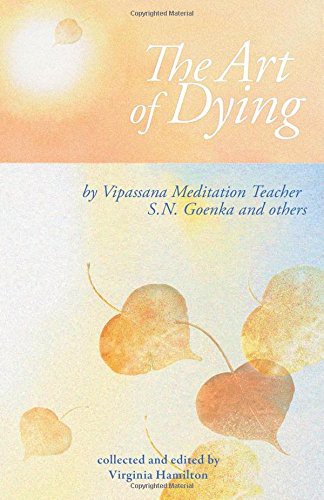
Surprisingly accessible, this book would make a good companion for anyone's meditation practice — but it would also make a good companion for anyone who has gone through, or is currently going through, the loss of a loved one. Most of the stories and interviews are with vipassana meditators who have only been meditating a short while (5 to 10 years) and found themselves with terminal cancer at a relatively young age. Each meditator has a very different story to tell and they all seem to relate to death quite differently, which was interesting (and surprising) and made reading each of their interviews worthwhile.
Goenkaji's first essay will be a bit impenetrable for someone who has never meditated before, and it appears early in the book. For that reason, it's unlikely that many non-meditators will finish this book. It's a beautifully-arranged series of essays and interviews, though, and hopefully a …
Surprisingly accessible, this book would make a good companion for anyone's meditation practice — but it would also make a good companion for anyone who has gone through, or is currently going through, the loss of a loved one. Most of the stories and interviews are with vipassana meditators who have only been meditating a short while (5 to 10 years) and found themselves with terminal cancer at a relatively young age. Each meditator has a very different story to tell and they all seem to relate to death quite differently, which was interesting (and surprising) and made reading each of their interviews worthwhile.
Goenkaji's first essay will be a bit impenetrable for someone who has never meditated before, and it appears early in the book. For that reason, it's unlikely that many non-meditators will finish this book. It's a beautifully-arranged series of essays and interviews, though, and hopefully a book we'll see floating around.

The Power is a 2016 science fiction novel by the British writer Naomi Alderman. Its …
This book doesn't necessarily feel that intense, but it really races along from chapter to chapter. Halfway through the book, I was stumbling over myself to finish it. At times, it felt more like watching a movie than reading a book and I expect to see this story told on Netflix soon.
Exclusive North American distributor: www.pariyatti.org
Webu Sayadaw has a very direct way of expressing to his students the technique and merits of Anapana meditation. His sense of humour comes through, even in the translation. This book makes a great bedside reader for anyone with a breath meditation practice, new or old.
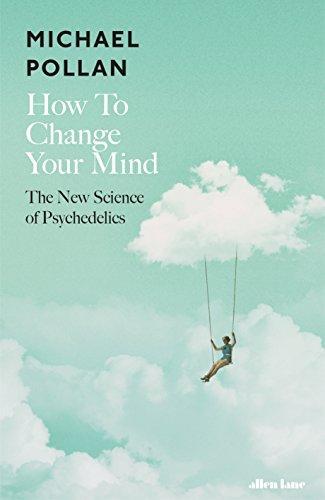
Offering us a curious romp through the history of psychedelics and psychedelic research, then his own personal experiences, and finally the modern scientific perspective, Pollan has transformed what would otherwise be a mountain of Wikipedia articles into a cohesive, flowing narrative. Most of it was really fun to read.
The origin story and recounting of the psychedelic 60s is easily the most enjoyable part of this book. Things get a bit drier with Pollan's own experiences, which read like dampened Erowid articles. Toward the end of the book, it starts to feel repetitive (yeah, okay... limiting the ego is a good thing... we get it) and the final mystery reveal of his ayahuasca experience in the last pages doesn't really make the drawn-out ending worthwhile.
This book will probably have the most to offer readers with no experience in psychedelics or other, safer, paths to altered states of consciousness.
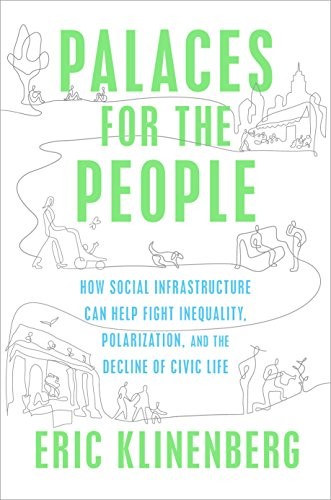
"An eminent sociologist--and coauthor, with Aziz Ansari, of the #1 New York Times bestseller Modern …
2.5 stars. A book about libraries does not need to mention Donald Trump.
There is a lot in this book that I hope many (most?) people already believe — or could be convinced of by Klinenberg. Unfortunately, I doubt his message will reach those who need to hear it most.
His vision for social infrastructure is well-researched and entirely correct but his delivery falls flat on a number of counts. In early chapters of the book he seems to go out of his way to identify the ethnicity of collaborators and research subjects. I understand the motivation to identify the communities who benefit from various forms of social infrastructure but in many places it's simply inappropriate. The book will also not age well, as repeated references to the garbage fire fashion show that is American politics won't survive into the next decade.
American politics aside, he rarely escapes America when …
2.5 stars. A book about libraries does not need to mention Donald Trump.
There is a lot in this book that I hope many (most?) people already believe — or could be convinced of by Klinenberg. Unfortunately, I doubt his message will reach those who need to hear it most.
His vision for social infrastructure is well-researched and entirely correct but his delivery falls flat on a number of counts. In early chapters of the book he seems to go out of his way to identify the ethnicity of collaborators and research subjects. I understand the motivation to identify the communities who benefit from various forms of social infrastructure but in many places it's simply inappropriate. The book will also not age well, as repeated references to the garbage fire fashion show that is American politics won't survive into the next decade.
American politics aside, he rarely escapes America when discussing actual projects. His focus on WEIRD countries, the US in particular, and the problems they face will fall on deaf ears in Level 3 and Level 2 countries across the world. I split my time between India (Level 2) and Canada (Level 4) and little of what he has to say pertains to my life in Asia. Yes, public libraries are awesome. What else?
The book would benefit from an arc. A full-blown story isn't really necessary but the book's structure lacks progression. Flat facts, date, association, leader, budget, are thrown out of the page, one after another, until I found myself numb to them. Stories of real social infrastructure projects are peppered with popular ideas regarding alt-right politics, social media, phones, and the internet underpinning all of it. Where he drifts from his area of expertise, the content of the book suffers. These passages tend to read like a well-written Reddit post.
Klinenberg's mission, ideas, and research are all absolutely worth your time... but you will need to dig them out from the rest of his book. And if you aren't American, you will likely need to translate them into your country of residence. We need more literature like this but it needs to avoid the temptation to make politics a key component of its presentation, appeal to a global audience, and deliver an unambiguous message showing us the way to build and rebuild our social infrastructure.
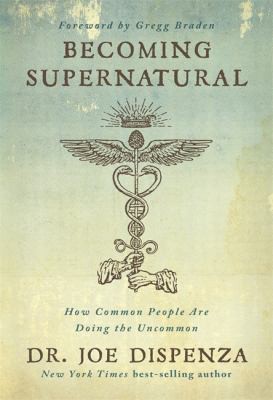
"The author of the New York Times bestseller You Are the Placebo, as well asBreaking …
Oof. Where to start?
A friend recommended this book after I suggested she read Altered Traits, a brilliant account of the last 40 years of hard science surrounding meditation as a research topic within the fields of Psychology and Neuroscience. This book is, perhaps, almost the exact opposite.
Science takes time. It's often boring and unpleasant and particularly when it comes to a topic such as consciousness, the very nature of the research topic becomes an exercise in growing the scientific method to incorporate increasingly difficult material. The researchers referenced in Altered Traits have fought to win objective, scientific results. "Dr. Joe" Dispenza takes another approach in Becoming Supernatural: he weaves together legitimate meditation research, high school physics, chemistry, and biology, and his own direct experience... making up connections between the three as he goes along. I would have no objection to a book which tackled any one …
Oof. Where to start?
A friend recommended this book after I suggested she read Altered Traits, a brilliant account of the last 40 years of hard science surrounding meditation as a research topic within the fields of Psychology and Neuroscience. This book is, perhaps, almost the exact opposite.
Science takes time. It's often boring and unpleasant and particularly when it comes to a topic such as consciousness, the very nature of the research topic becomes an exercise in growing the scientific method to incorporate increasingly difficult material. The researchers referenced in Altered Traits have fought to win objective, scientific results. "Dr. Joe" Dispenza takes another approach in Becoming Supernatural: he weaves together legitimate meditation research, high school physics, chemistry, and biology, and his own direct experience... making up connections between the three as he goes along. I would have no objection to a book which tackled any one of these in isolation, but conflating them is at best disingenuous, at worst dangerous.
Here's why. Most of his meditation-focused writing is not too far off the mark and his book would actually be less dangerous if it seemed hokier. Much of what he says holds merit, in isolation. Meditation can help its practitioners lead healthier and happier lives and the strategies he discusses and the benefits he points out are entirely legitimate, to an extent. But he is clearly targeting an audience of beginners and someone beginning a meditation practice should work slowly, carefully, and skeptically. He is suggesting diving in headfirst, with the promise of massive physical and mental health benefits. This is unethical.
The meditation he suggests is a variation on Kundalini Yoga, which has widely-documented and discussed mental health risks. Attention placed on the nervous system can cause very serious trauma to surface in the psyche and the spinal cord is one of the last places a practitioner should choose to make use of attention in this way.
His descriptions of why and how meditation works are undefended by any objective research or reference beyond his own experience — he is within his right to describe the human body as a magnetic torus, if he must, but he should have clearly delineated that unverified idea from the neuroscience which is not his own. He doesn't. He simply flips between hard science and imaginative ideas at the drop of a hat, which makes the sum of the book hard to swallow.
Dispenza makes a final mistake throughout the book, in his delivery of meditation instructions. Meditation instructions such as this, from Chapter 9 (Walking Meditation):
Raise your energy to its zenith and feel gratitude, appreciation, and thankfulness.
Now acknowledge the divine within you—the energy that powers you and gives rise to all of life. Give thanks for a new life before it's made manifest. Acknowledging the power within you, ask that your life be filled with unexpected wonder, synchronicities, and coincidences that create a joy for existence. Radiate your love while loving your new life into existence.
Very well written. Minimally enjoyable story.
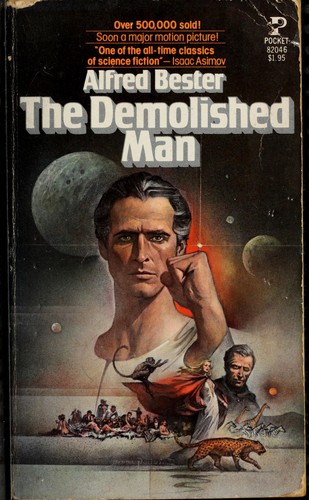
In a world in which the police have telepathic powers, how do you get away with murder?
Ben Reichs heads …
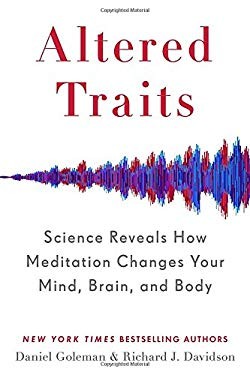
More than forty years ago, two friends and collaborators at Harvard, Daniel Goleman and Richard …
Five stars if you've looked into the awful, awful "science" behind meditation and asked yourself "where the heck is the good research?"
Most research into the objective effects of meditation is staggeringly bad and it is the mission of Goleman and Davidson to summarize the real science while explaining why most research fails the modern scientific standard. The authors do a brilliant job of meta-research on meditation with just enough history peppered with anecdotes to keep this book a book (as opposed to a very long research paper).
The bibliography and notes of this book is a treasure trove unto itself. Very highly recommended as a starting point in searching out the papers and articles that underpin what has become widely accepted — that meditation is beneficial and worthwhile — but barely understood.
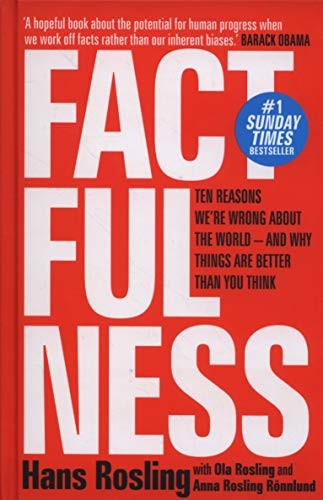
It turns out that the world, for all its imperfections, is in a much better …
I absolutely loved this book. If you've seen Rosling's talks before, it's likely you know a lot of what's in here. But the real value of this book for me was solidifying the idea of the World Bank's "Level" system, borrowed from Rosling, into my brain.
Canada is Level 4. India is Level 2. My friends in India are Level 4. My off-grid cabin is Level 3 (but a comfortable Level 3, since it's in a Level 4 country). Getting away from the concept of "us" and "them", "normal" and "poor" is a valuable lesson for almost anyone I know. This vocabulary stimulates a whole new kind of conversation.
Beyond the Level system, readers will come away with a stronger understanding of the basic statistics that go into this data, some helpful tools for dealing with the world around them (and their own minds), and some genuine hopefulness rooted in …
I absolutely loved this book. If you've seen Rosling's talks before, it's likely you know a lot of what's in here. But the real value of this book for me was solidifying the idea of the World Bank's "Level" system, borrowed from Rosling, into my brain.
Canada is Level 4. India is Level 2. My friends in India are Level 4. My off-grid cabin is Level 3 (but a comfortable Level 3, since it's in a Level 4 country). Getting away from the concept of "us" and "them", "normal" and "poor" is a valuable lesson for almost anyone I know. This vocabulary stimulates a whole new kind of conversation.
Beyond the Level system, readers will come away with a stronger understanding of the basic statistics that go into this data, some helpful tools for dealing with the world around them (and their own minds), and some genuine hopefulness rooted in fact. One day, I hope this book becomes a household name and a core part of peoples' local cannon.

The uplifting message of Reinventing Organizations has resonated with readers all over the world, and …
This book should be five stars. But it has problems. If you run an organization today, you should definitely read it... you are no doubt reading much worse business literature with much less insightful content. The research is great. The examples are clear and practical. It's just a slog.
Here are my caveats:
Caveat One: Sounds True Publishing
The author has inexplicably included Sounds True Publishing (soundstrue.com), a company which bears nothing in common with any of the other organizations mentioned. When Pratul suggested the book, I was hesitant about the theme and waited to pick the book up for months thanks to the blue butterflies hovering over an Apple keyboard. As it turns out, this cover art has nothing to do with the contents of the book and I was saved from stories about obnoxiously hip technology companies or groan-worthy metaphorical references to metamorphosis. Most of the …
This book should be five stars. But it has problems. If you run an organization today, you should definitely read it... you are no doubt reading much worse business literature with much less insightful content. The research is great. The examples are clear and practical. It's just a slog.
Here are my caveats:
Caveat One: Sounds True Publishing
The author has inexplicably included Sounds True Publishing (soundstrue.com), a company which bears nothing in common with any of the other organizations mentioned. When Pratul suggested the book, I was hesitant about the theme and waited to pick the book up for months thanks to the blue butterflies hovering over an Apple keyboard. As it turns out, this cover art has nothing to do with the contents of the book and I was saved from stories about obnoxiously hip technology companies or groan-worthy metaphorical references to metamorphosis. Most of the stories, structures, process, and advice were about real organizations filled with real people — a school in Germany, a non-profit nursing agency in the Netherlands, a tomato paste factory in the mid-western United States, a brass car parts manufacturer in France. Most of these organizations were bootstrapped and extremely profitable. In fact, not a single example stood out and made me think "well, this is just some new-age bullshit and/or a pointless indulgence of venture capital."
Except Sounds True Publishing, which was both. Sounds True is VC-backed. It is based on questionable ethics: to build a for-profit business out of selling literature from the world's various wisdom traditions, which almost exclusively distribute their literature for free or the cost of production. It sounds like an incredibly obnoxious workplace. From the CFO who was forced to leave because he refused to indulge the founder when she insisted he open up emotionally to her — to the twenty dogs the company "employs" — to "wine and music Fridays" which are the upper-middle-class equivalent of trading firms "beer o'clock"... all three equally repulsive to those of us who happen to be introverts, allergic to dogs, and/or recovering alcholics.
The coup de grâce comes on page 187 when the author admits "Sounds True ... still has a hierarchical structure." At that point I literally put the book down and asked out loud "THEN WHY THE FUCK DID YOU INCLUDE IT?"
Sounds True ruins this book. Where it is mentioned or where its practices are highlighted, the book sinks down to airport-bookstore-new-age-spiritual meaninglessness. About halfway through the book, there is a burst of these. If you skip Chapter 2.5 ("Striving for Wholeness"), you will avoid phrases like "When it feels unsafe to speak our truth, we shut down our inner voice..." and "...safe enough to reveal our selfhood..." and "something-something... purpose circles" and "...express their selfhood..." and "do [our job] from our selfhood". Ugh. Barf.
There are other spots in the book which get stuck in this talk of "listening each other into selfhood and wholeness", references to Tingsha bells in the office, and other vomit-worthy blurbs. But if you skip Chapter 2.5 you will largely be saved.
Oh, and the foreword by Ken Wilber. Do not read that. It's impenetrable.
Caveat Two: Laloux misunderstands co-operatives
Laloux mentioned co-operatives only once or twice in the entire book but seems almost proud to announce that not a single co-operative is included in his research. It is perhaps valuable for him to demonstrate that the principles and practices he advocates work in all manner of more commonly-understood legal structures.
However, when he gets to the foundation of organizations capable of adopting the practices, he openly admits "Ownership is make-or-break for Evolutionary-Teal [his term for self-managing organizations]." Uhm... what? Then why risk getting ownership wrong? He then goes on to expound on failed Teal organizations which once thrived in self-management but collapsed due to misplaced ownership: "The stories of AES and BSO/Origin illustrate that Teal organizational practices are vulnerable when investors and board members don't share in the paradigm." Feels like removing the very concepts of "investors" and "board members" would solve that problem for you, Fred.
This hits its most frustrating note on page 269 and 270 when he insists that "psychological ownership" of the company is essential at every level to transform an existing, old-fashioned command-and-control company into a self-managing Teal company. There is a really short path to irrevocably providing your employees "psychological ownership": give them real ownership. Surely this isn't that complicated?
Why you, Ms. CEO, should read the book
I have given you all the hints for making this book readable... and it's quite an important book to read if you are running an organization of any kind: a school, a business, a non-profit, a hospital, or a government agency. I have yet to see these ideas in print anywhere else.
His research about the actual, real-life, concrete concepts is honestly fantastic. "This is how the largest tomato processing plant in the USA makes self-management work: step 1, 2, 3." In these sections, his prose is lucid and the ideas he has borrowed from the companies he researched are concrete and immediately actionable. (Though he did research two non-profits and one school, his subjects of research are, by and large, for-profit corporations.)
His research regarding models for conceptualizing organizations, and society as a whole, is also extremely valuable. Wilber's 4-Quadrant Model is perhaps the most valuable idea presented in A Brief History of Everything and Laloux incorporates it into his conceptual model quite flawlessly.
I wish he had stuck entirely to this theme and dropped all the new-age spirituality mumbo jumbo. The world's corporations and schools desperately need to hear what he has to say.